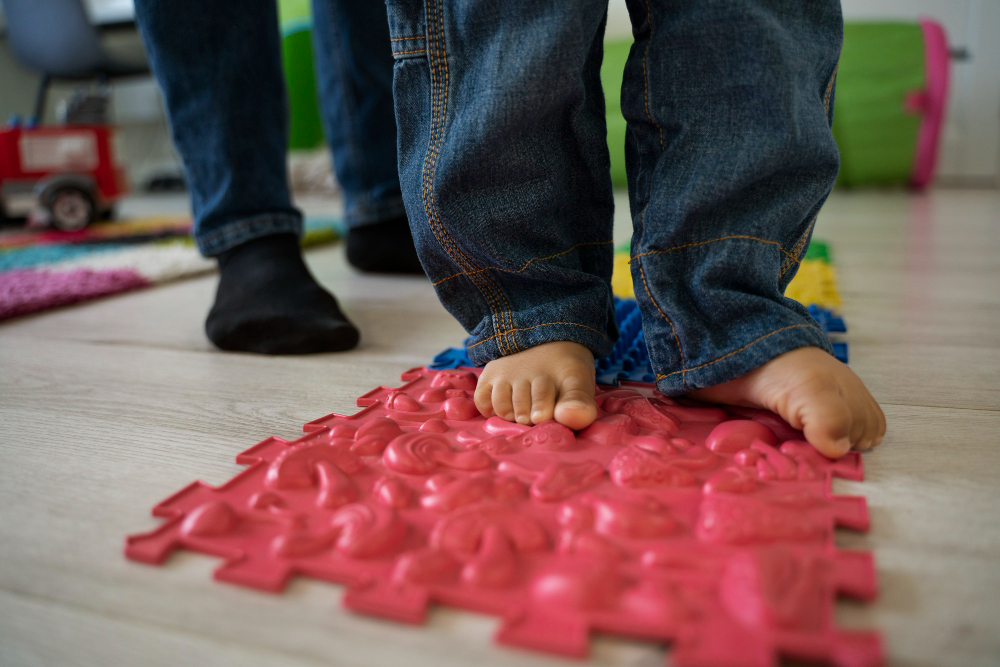
Supporting the Foundations of Development Through Movement, Sensory Experiences, and Connection
In DIRFloortime®, we understand that before children can engage in complex thinking, conversation, or imaginative play, they first need strong developmental foundations.
These foundations are built through the lower Functional Emotional Developmental Capacities (FEDCs):
- FEDC 1 — Regulation and Interest in the World
- FEDC 2 — Engagement and Relating
- FEDC 3 — Two-Way Purposeful Communication
One of the most effective ways we support these early capacities is through sensorimotor play.
What are sensorimotor activities?
Sensorimotor activities involve movement, body awareness, and sensory experiences that help children process and respond to the world around them.
These activities may include:
- swinging,
- climbing,
- jumping,
- spinning,
- crashing onto cushions,
- water play,
- sand play,
- messy play,
- obstacle courses,
- bubbles,
- music and movement,
- pushing and pulling,
- sensory bins,
- animal walks,
- rough-and-tumble play,
- deep pressure games,
- or interactive movement songs.
In DIRFloortime®, sensorimotor activities are not used simply to “burn energy” or keep children busy. They are opportunities for connection, regulation, communication, and emotional growth.
Supporting FEDC 1 — Regulation and Interest in the World
Children first need to feel safe, regulated, and organised in their bodies before they can fully engage with others.
Many children experience challenges with:
- sensory processing,
- attention,
- motor planning,
- emotional regulation,
- or staying calm and connected.
Sensorimotor activities help support the nervous system by giving children sensory input their bodies may be seeking or needing support with processing.
For example:
- swinging may help a child feel calm and organised,
- jumping may help increase alertness and body awareness,
- deep pressure may help a child feel safe and grounded,
- water play may help support calm attention and exploration.
When children feel more regulated, we often see:
- better attention,
- more curiosity,
- increased engagement,
- greater emotional availability,
- and improved capacity for interaction.
Supporting FEDC 2 — Engagement and Relating
Connection often happens more naturally when children are moving and playing.
A child who struggles with sitting face-to-face may become highly engaged during:
- chase games,
- peekaboo,
- bouncing activities,
- movement songs,
- or sensory play.
Shared joy and emotional connection are key parts of FEDC 2.
Through sensorimotor play, children begin to:
- enjoy being with another person,
- anticipate interactions,
- share pleasure,
- seek connection,
- and stay emotionally connected for longer periods.
Simple playful moments like:
“Ready… set… GO!”
or
“Crash!”
can become meaningful circles of communication and shared emotional experiences.
Supporting FEDC 3 — Two-Way Purposeful Communication
Once a child is regulated and engaged, they become more available for purposeful communication.
Sensorimotor activities naturally create opportunities for:
- requesting,
- gesturing,
- looking,
- vocalising,
- initiating,
- responding,
- taking turns,
- and problem solving.
For example:
- pausing before pushing a swing,
- waiting expectantly before blowing bubbles,
- creating playful anticipation during movement games,
- or adding small challenges into sensory play.
These moments encourage the child to communicate intentionally because the interaction itself is motivating and emotionally meaningful.
Why movement and sensory experiences are so important
Children do not develop through isolated skills alone.
Development happens through:
- relationships,
- emotional experiences,
- sensory processing,
- movement,
- and meaningful interactions.
For many children, their bodies are the pathway to connection and learning.
When we support regulation through sensorimotor play, we are helping build the foundations needed for:
- attention,
- communication,
- emotional regulation,
- social interaction,
- problem solving,
- and later imaginative thinking.
The adult’s role in sensorimotor play
In DIRFloortime®, adults are not simply supervising activities. We are emotionally present partners in the experience.
We:
- follow the child’s interests,
- observe their sensory needs,
- co-regulate alongside them,
- create playful interactions,
- support shared attention,
- and build communication naturally within the activity.
The goal is not perfect performance or completing tasks “correctly.”
The goal is connection, regulation, and joyful interaction.
Sensorimotor play is meaningful developmental work
To an outside observer, it may look like:
- “just jumping,”
- “just splashing,”
- or “just running around.”
But underneath those moments, children may be building:
- regulation,
- body awareness,
- trust,
- engagement,
- communication,
- emotional connection,
- and the earliest foundations of learning.
That is why sensorimotor activities are such an important part of DIRFloortime®.