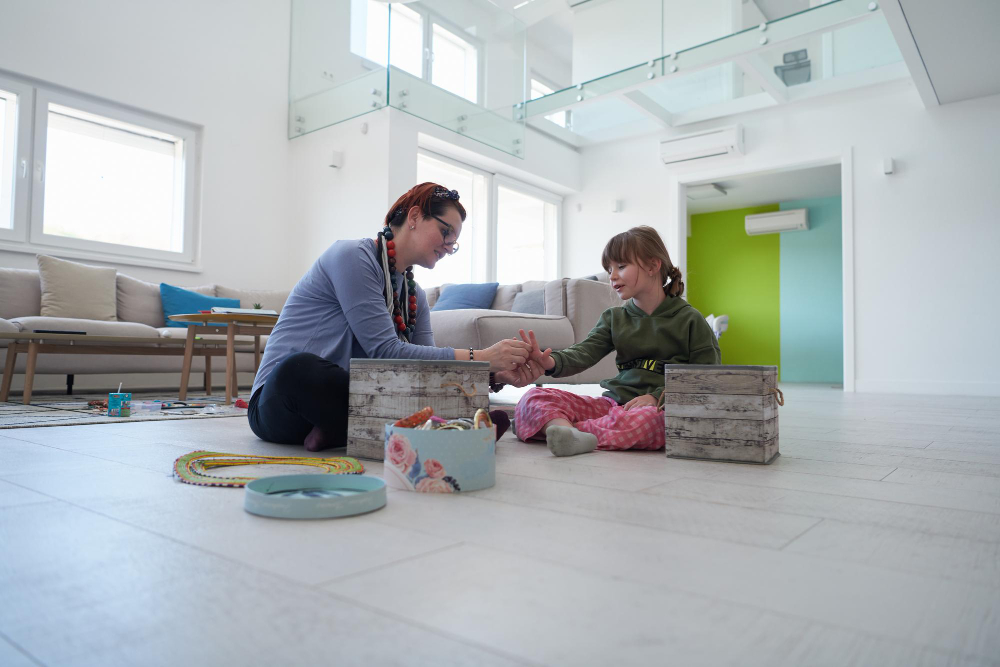
Your relationship is your child’s greatest opportunity for growth.
When parents first learn about DIRFloortime®, one of the most common questions is:
“Do I have to become my child’s therapist?”
The answer is no.
DIRFloortime® isn’t about adding another job to your already busy day. It’s about recognising that you are your child’s most important relationship, and relationships are where development happens.
You don’t need to be perfect
Many parents worry they aren’t doing enough.
The beauty of DIRFloortime® is that it isn’t about creating hours of therapy at home. It’s about making the most of the moments you already share with your child.
Even 20 minutes of intentional, uninterrupted play—or smaller moments of genuine connection throughout the day—can support your child’s development.
Your presence matters more than perfection.

Follow your child’s lead
One of the key principles of DIRFloortime® is following your child’s interests.
Instead of leading the play, take a moment to enter their world.
Whether they’re building with LEGO®, pretending to be superheroes, jumping on the trampoline, or lining up toy cars, their interests become the doorway to connection, communication, and learning.
When children feel understood, they are more likely to engage, communicate, and think alongside you.
Remember the DIR®
Every child is unique. DIRFloortime® encourages us to look at three important areas:
- Development (D): Where is my child in their developmental journey?
- Individual Differences (I): How does my child experience and respond to the world?
- Relationships (R): How can I use our relationship to support their growth?
When we understand these three areas, everyday interactions become meaningful opportunities for development.
Everyday moments matter
Floortime doesn’t only happen on the floor.
It can happen while:
- getting dressed
- cooking dinner
- having a bath
- walking to the park
- driving to school
- reading a bedtime story
- sharing a laugh at breakfast
These everyday routines are filled with opportunities to build communication, emotional regulation, problem solving, and connection.
Your Key Worker is there to support you
The NDIS recognises that parents are central to their child’s development. Through the Key Worker model, families are supported to build their own knowledge, confidence, and practical strategies so they can continue supporting their child’s development long after early intervention has finished.
The goal isn’t for parents to become therapists. It’s to empower them to confidently support their child’s learning and development within everyday family life.
You are already enough
Life is busy. Parenting can be exhausting.
DIRFloortime® isn’t asking you to do more. It’s inviting you to be more intentional with the time you already have.
A few minutes of shared joy, curiosity, and connection each day can make a meaningful difference over time.
Because in DIRFloortime®, the greatest tool for helping a child grow isn’t found in a toy or a therapy room.
It’s found in a connected relationship with you.